-
Shop
- Adidas
- Advanced Technologies
- Auto
- Back to School
- Best-Sellers
- Car Accessories
- Dating & Social Skills
- Education & Learning
- Family & Parenting
- Fashion
- Alexander McQueen
- Balenciaga
- Belts
- Blazers
- Bottega Veneta
- Brunello Cucinelli
- Burberry
- Chanel
- Chloé
- Dior
- Dolce & Gabbana
- Etro
- Fendi
- Gucci
- Hoodies & Sweatshirts
- Jacquemus
- Jil Sander
- Jimmy Choo
- Kiton
- Luggage
- Miu Miu
- Off-White
- Outerwear
- Prada
- Rick Owens
- Saint Laurent
- Sweaters & Cardigans
- The Row
- Tom Ford
- Tops & Shirts
- Umbrellas
- Valentino
- Valentino Garavani
- Versace
- Vivienne Westwood
- Fashion Accessories
- Gadgets
- Gifts
- Health & Beauty
- Health & Wellness
- Home & Garden
- Home Supplies
- Kids & Babies
- Kitchen
- Nike
- Outdoor Fun
- Patio, Lawn & Garden
- Personal Growth
- Pet Care
- Pet Supplies
- Pets
- Sport & Outdoors
- Summer 2025 Fashion Collection
- Summer Fashion
- Summer Food & Drinks
- Super Deals
- Travel
- Travel Gear
- Wealth
Men’s White Leather Vans for Fall & Winter: Fit, Grip
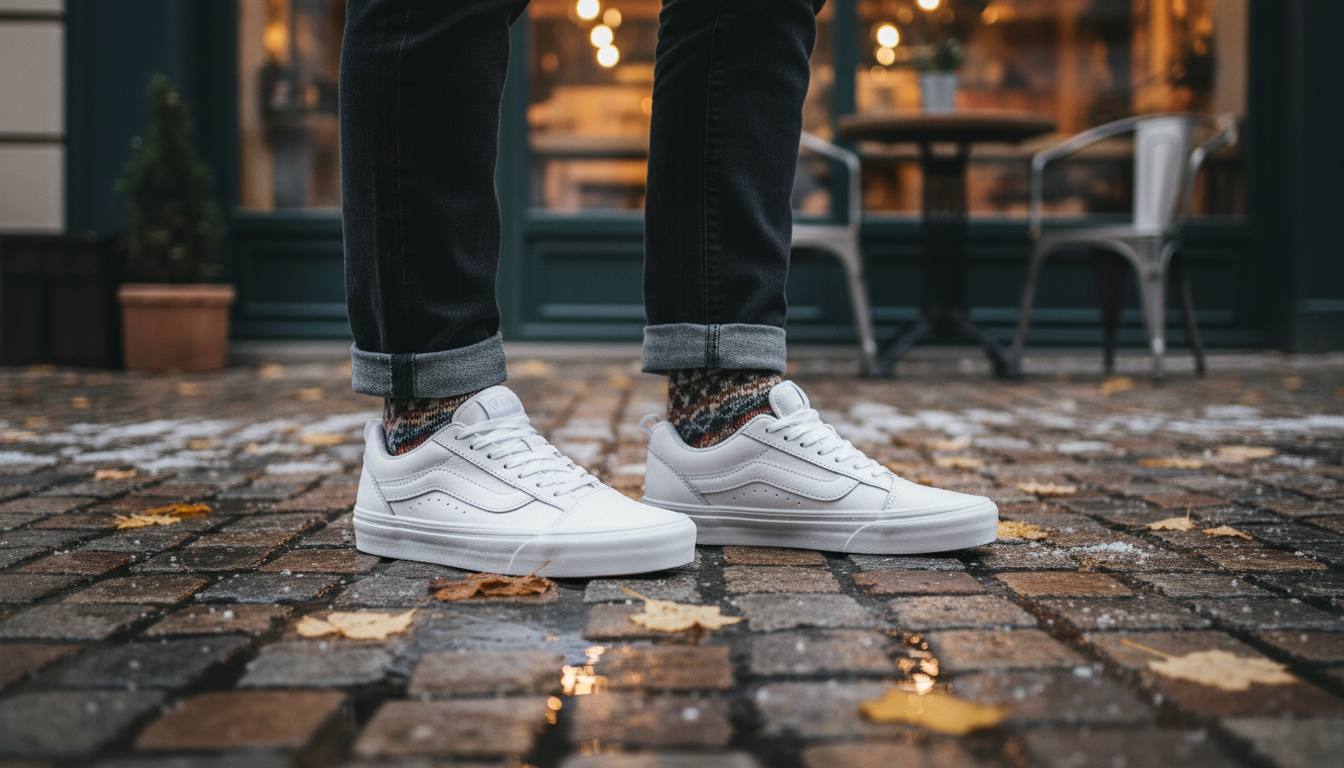
Vans Men’s White Leather Shoes for Fall and Winter: Clean Look, Cold-Season Comfort
White leather sneakers can still make sense in colder months—provided the materials, traction, and care routine match the realities of damp sidewalks and temperature swings. Leather brings a cleaner look than canvas in messy weather, and it’s easier to maintain when rain spots, grit, and salt are part of the commute. Below is a practical guide to choosing fall/winter-friendly leather Vans, styling them when the forecast is unpredictable, and keeping white leather looking sharp through daily wear.
What Makes Leather Vans a Solid Fall/Winter Option
- More wind blocking than canvas: Leather uppers typically feel less drafty on cold, breezy days and can be more comfortable when temperatures drop.
- Easier cleanup after light rain or slush: A quick wipe often removes surface grime before it stains, which is especially helpful with white shoes.
- Stability matters more in cold months: A supportive collar and stable sole help when sidewalks turn slick and your stride changes with heavier layers.
- Brightens darker outfits: White leather pairs easily with neutrals, denim, and earth tones, keeping fall and winter looks from feeling too heavy.
- Traction and water resistance are the real test: Leather isn’t automatically waterproof—seams and lace areas can still let moisture in without protection.
Vans Men’s White Leather Fall/Winter Shoes: Quick Specs and Buying Snapshot
If you want a simple everyday pair that still looks crisp with seasonal layers, Vans Men’s White Leather Fall/Winter Shoes fit well into a rotation for commuting, errands, and casual weekends. They’re especially useful for light wet-weather days when you’ve applied a proper leather protector spray and you’re not wading through puddles.
- Best for: everyday wear, commuting, casual weekends, light wet-weather days with proper protection.
- Style range: works with streetwear, smart-casual layers, and minimalist wardrobes.
- Budget note: priced like an accessible daily sneaker, which makes rotation and seasonal replacement easier.
Product snapshot
| Item | Price | Availability | Link |
|---|---|---|---|
| Vans Men’s White Leather Fall/Winter Shoes | 52.01 USD | In stock | View product |
Season-Ready Comfort: Fit, Socks, and Break-In
Cold-weather comfort is less about “warm shoes” and more about smart fit and friction control. If circulation gets restricted, feet feel colder faster; if the shoe slips, you’ll get hotspots and blisters.
- Fit check for thicker socks: Leave a little toe room for medium-weight socks without creating heel slip. If the heel lifts, re-lace to lock the heel down before sizing up.
- Sock choice: Medium-weight merino or cushioned cotton blends help regulate temperature and reduce rubbing. The American Academy of Dermatology also emphasizes friction management to prevent blisters; practical tips are outlined here: How to prevent blisters (AAD).
- Break-in plan: Wear them indoors first for short sessions so creases soften gradually. Leather that breaks in gently is less likely to pinch when temperatures drop.
- Add-ons: A thin insole can add a touch of warmth and underfoot comfort—just make sure it doesn’t make the shoe too tight across the forefoot.
On especially cold days, keep overall exposure in mind. If you’ll be outside for extended periods, follow cold safety basics such as layering and staying dry; the CDC overview on cold stress is a solid reference: CDC: Cold stress.
Wet Sidewalks and Traction: Staying Confident on the Move
- Prioritize outsole grip: Wet leaves and damp pavement can be slick. Do a short walk-test on wet ground before committing to an all-day wear.
- Keep soles clean: Mud buildup reduces traction. A quick brush-off at the door can restore grip and prevent grime from being tracked indoors.
- Upgrade protection for frequent wet days: Use a leather-safe water/stain repellent and consider water-repellent laces if your setup allows. This won’t make the shoe a rain boot, but it helps against splashes.
- Avoid deep puddles and heavy slush: Leather can resist light moisture, but seams and stitching can still let water in—especially if the shoe gets soaked repeatedly.
Keeping White Leather Looking Fresh Through Fall and Winter
Outfit Pairings That Work in Cold Weather
- Dark denim + wool coat: White leather adds contrast and keeps the outfit crisp. If you want a polished outer layer, a classic trench can bridge fall into early winter—see Burberry Classic Double-Breasted Trench Coat with Check Lining for a structured option.
- Olive cargos + puffer: The clean white base balances sporty outerwear and adds definition to relaxed silhouettes.
- Black jeans + flannel overshirt: Simple, practical, and easy to maintain when sidewalks are wet and you’re moving between indoors and outdoors.
- Rainy-day adjustment: Choose tapered pants that sit above the collar so wet hems don’t rub onto leather and transfer grime.
When to Choose These Shoes (and When to Pick Something Else)
Compare related options such as Charming Kawaii Flamingo Magnet Bookmark, and Waterproof Insulated Lunch Bag to match features, dimensions, and use case before choosing.
FAQ
Are leather Vans good for winter?
They can be for moderate winter conditions: leather helps block wind and handles light moisture better than canvas, but it isn’t fully waterproof. Traction, sock choice, and a protector spray make the biggest difference, and boots are the better pick for deep snow or heavy slush.
How do you protect white leather shoes from rain and salt?
Use a leather-safe water/stain repellent before wearing, wipe shoes down soon after exposure, and let them air-dry at room temperature. For salt, wipe gently with a slightly damp cloth, dry right away, and condition lightly to keep the leather from drying out.
How should leather Vans fit if wearing thicker socks?
Leave a little extra toe room while keeping the heel secure—your foot shouldn’t slide. Adjust lacing to lock the heel down, and avoid an overly tight fit that can reduce circulation and make feet feel colder.
Recommended for you

Vans Men’s White Leather Shoes for Fall and Winter: Clean Look, Cold-Season Comfort
White leather sneakers can still make sense in colder months—provided the materials, traction, and care routine match the realities of damp sidewalks and temperature swings. Leather brings a cleaner look than canvas in messy weather, and it’s easier to maintain when rain spots, grit, and salt are part of the commute. Below is a practical guide to choosing fall/winter-friendly leather Vans, styling them when the forecast is unpredictable, and keeping white leather looking sharp through daily wear.
What Makes Leather Vans a Solid Fall/Winter Option
- More wind blocking than canvas: Leather uppers typically feel less drafty on cold, breezy days and can be more comfortable when temperatures drop.
- Easier cleanup after light rain or slush: A quick wipe often removes surface grime before it stains, which is especially helpful with white shoes.
- Stability matters more in cold months: A supportive collar and stable sole help when sidewalks turn slick and your stride changes with heavier layers.
- Brightens darker outfits: White leather pairs easily with neutrals, denim, and earth tones, keeping fall and winter looks from feeling too heavy.
- Traction and water resistance are the real test: Leather isn’t automatically waterproof—seams and lace areas can still let moisture in without protection.
Vans Men’s White Leather Fall/Winter Shoes: Quick Specs and Buying Snapshot
If you want a simple everyday pair that still looks crisp with seasonal layers, Vans Men’s White Leather Fall/Winter Shoes fit well into a rotation for commuting, errands, and casual weekends. They’re especially useful for light wet-weather days when you’ve applied a proper leather protector spray and you’re not wading through puddles.
- Best for: everyday wear, commuting, casual weekends, light wet-weather days with proper protection.
- Style range: works with streetwear, smart-casual layers, and minimalist wardrobes.
- Budget note: priced like an accessible daily sneaker, which makes rotation and seasonal replacement easier.
Product snapshot
| Item | Price | Availability | Link |
|---|---|---|---|
| Vans Men’s White Leather Fall/Winter Shoes | 52.01 USD | In stock | View product |
Season-Ready Comfort: Fit, Socks, and Break-In
Cold-weather comfort is less about “warm shoes” and more about smart fit and friction control. If circulation gets restricted, feet feel colder faster; if the shoe slips, you’ll get hotspots and blisters.
- Fit check for thicker socks: Leave a little toe room for medium-weight socks without creating heel slip. If the heel lifts, re-lace to lock the heel down before sizing up.
- Sock choice: Medium-weight merino or cushioned cotton blends help regulate temperature and reduce rubbing. The American Academy of Dermatology also emphasizes friction management to prevent blisters; practical tips are outlined here: How to prevent blisters (AAD).
- Break-in plan: Wear them indoors first for short sessions so creases soften gradually. Leather that breaks in gently is less likely to pinch when temperatures drop.
- Add-ons: A thin insole can add a touch of warmth and underfoot comfort—just make sure it doesn’t make the shoe too tight across the forefoot.
On especially cold days, keep overall exposure in mind. If you’ll be outside for extended periods, follow cold safety basics such as layering and staying dry; the CDC overview on cold stress is a solid reference: CDC: Cold stress.
Wet Sidewalks and Traction: Staying Confident on the Move
- Prioritize outsole grip: Wet leaves and damp pavement can be slick. Do a short walk-test on wet ground before committing to an all-day wear.
- Keep soles clean: Mud buildup reduces traction. A quick brush-off at the door can restore grip and prevent grime from being tracked indoors.
- Upgrade protection for frequent wet days: Use a leather-safe water/stain repellent and consider water-repellent laces if your setup allows. This won’t make the shoe a rain boot, but it helps against splashes.
- Avoid deep puddles and heavy slush: Leather can resist light moisture, but seams and stitching can still let water in—especially if the shoe gets soaked repeatedly.
Keeping White Leather Looking Fresh Through Fall and Winter
If you’re also thinking about material impact and sourcing, Leather Working Group shares background on responsible leather supply chains: The Leather Working Group.
Outfit Pairings That Work in Cold Weather
- Dark denim + wool coat: White leather adds contrast and keeps the outfit crisp. If you want a polished outer layer, a classic trench can bridge fall into early winter—see Burberry Classic Double-Breasted Trench Coat with Check Lining for a structured option.
- Olive cargos + puffer: The clean white base balances sporty outerwear and adds definition to relaxed silhouettes.
- Black jeans + flannel overshirt: Simple, practical, and easy to maintain when sidewalks are wet and you’re moving between indoors and outdoors.
- Rainy-day adjustment: Choose tapered pants that sit above the collar so wet hems don’t rub onto leather and transfer grime.
When to Choose These Shoes (and When to Pick Something Else)
FAQ
Are leather Vans good for winter?
They can be for moderate winter conditions: leather helps block wind and handles light moisture better than canvas, but it isn’t fully waterproof. Traction, sock choice, and a protector spray make the biggest difference, and boots are the better pick for deep snow or heavy slush.
How do you protect white leather shoes from rain and salt?
Use a leather-safe water/stain repellent before wearing, wipe shoes down soon after exposure, and let them air-dry at room temperature. For salt, wipe gently with a slightly damp cloth, dry right away, and condition lightly to keep the leather from drying out.
How should leather Vans fit if wearing thicker socks?
Leave a little extra toe room while keeping the heel secure—your foot shouldn’t slide. Adjust lacing to lock the heel down, and avoid an overly tight fit that can reduce circulation and make feet feel colder.
Recommended for you
Was this article helpful?
Yes
No









Leave a comment