-
Shop
- Adidas
- Advanced Technologies
- Auto
- Back to School
- Best-Sellers
- Car Accessories
- Dating & Social Skills
- Education & Learning
- Family & Parenting
- Fashion
- Alexander McQueen
- Balenciaga
- Belts
- Blazers
- Bottega Veneta
- Brunello Cucinelli
- Burberry
- Chanel
- Chloé
- Dior
- Dolce & Gabbana
- Etro
- Fendi
- Gucci
- Hoodies & Sweatshirts
- Jacquemus
- Jil Sander
- Jimmy Choo
- Kiton
- Luggage
- Miu Miu
- Off-White
- Outerwear
- Prada
- Rick Owens
- Saint Laurent
- Sweaters & Cardigans
- The Row
- Tom Ford
- Tops & Shirts
- Umbrellas
- Valentino
- Valentino Garavani
- Versace
- Vivienne Westwood
- Fashion Accessories
- Gadgets
- Gifts
- Health & Beauty
- Health & Wellness
- Home & Garden
- Home Supplies
- Kids & Babies
- Kitchen
- Nike
- Outdoor Fun
- Patio, Lawn & Garden
- Personal Growth
- Pet Care
- Pet Supplies
- Pets
- Sport & Outdoors
- Summer 2025 Fashion Collection
- Summer Fashion
- Summer Food & Drinks
- Super Deals
- Travel
- Travel Gear
- Wealth
Flying Disc Launcher Toy Games: Safe Setup & Fun Ideas
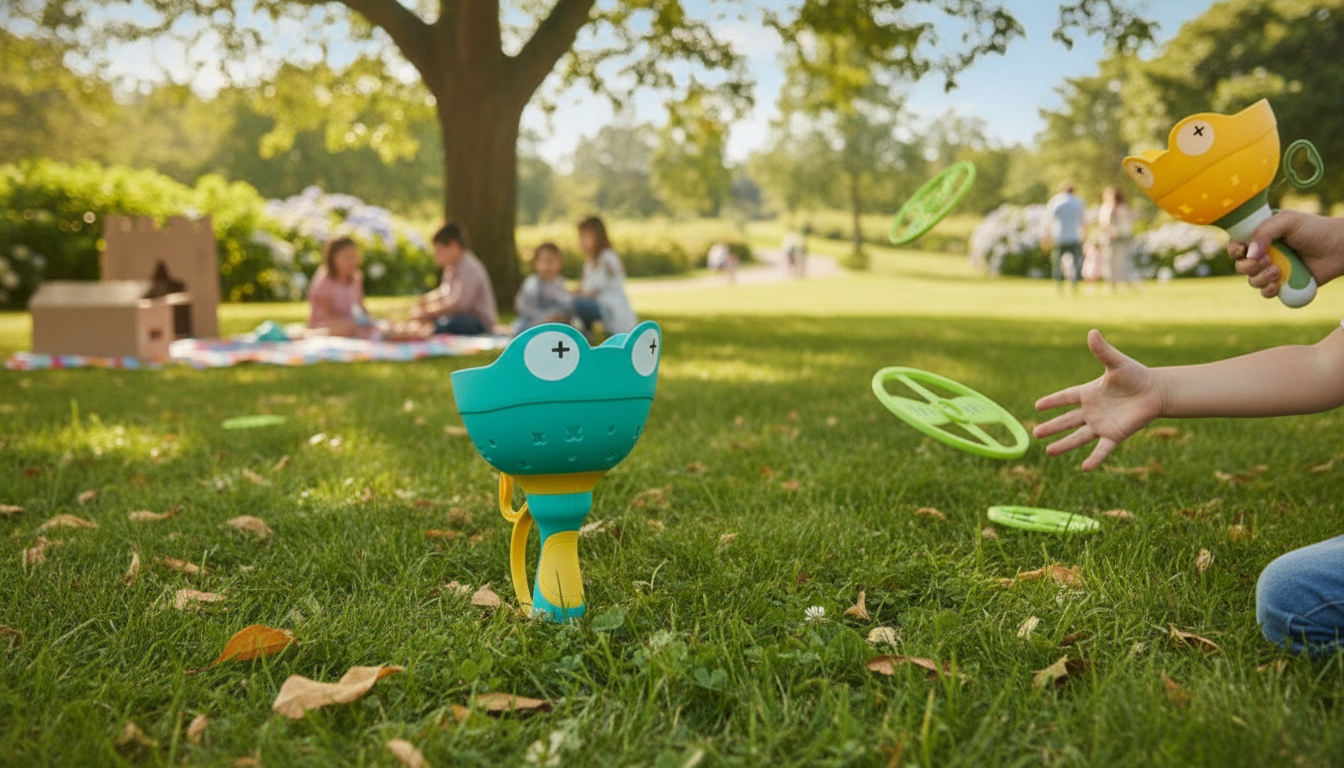
Flying Disc Launcher Toy: Outdoor Action Game for Kids and Families
A flying disc launcher toy turns a simple disc into a fast, repeatable launching game that fits naturally into backyard afternoons, park meetups, or beach days. Instead of relying on a single “perfect throw,” the launcher helps create consistent spin and release so kids (and adults) can focus on running routes, timing catches, and aiming for targets. Below is a practical guide to how these toys work, how to set up safe play, and a handful of easy games that keep everyone moving.
What It Is and How the Launcher Works
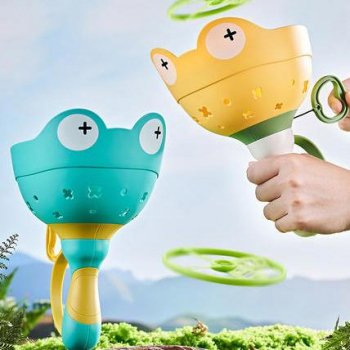
A flying disc launcher is typically handheld and designed to grip, roll, or spin a lightweight disc before releasing it with a quick motion. That extra consistency is what makes it feel like an “action game” rather than a standard toss-and-chase toy.
- Consistent flight: The launcher helps create repeatable spin, which can make the disc track straighter and stay aloft longer.
- Active play by design: Expect sprinting, quick turns, tracking a moving object, and lots of retrieving—especially for early practice rounds.
- Flexible play styles: Distance throws, accuracy shots, cooperative catch, and mini competitions all work well.
- Space matters: Use open areas away from roads, windows, and crowded walkways so everyone can focus on the game instead of dodging hazards.
Who It’s Great For
This kind of toy tends to “click” with kids who like instant re-tries and movement-based challenges.
- Kids who love motion: Great for runners, jumpers, and “one more turn” personalities.
- Families who want low setup: No net required, no long instructions—just a lane and a few rules.
- Playdates and small groups: Easy to rotate turns, keep score, and run quick tournaments.
- Skill building: Hand–eye coordination, tracking a moving disc, and learning controlled release timing.
Quick Setup and First-Use Checklist
A smooth first session usually comes down to choosing the right space and keeping early throws simple.
- Pick a clear launch lane: Start with a straight path free of trees, benches, and swing sets.
- Begin with short launches: Use gentle power to learn release timing before chasing max distance.
- Set one key rule: “No-face launches.” Aim for chest-level catching practice to reduce surprise impacts.
- Keep spare discs nearby: If extras are included, stack them close so play doesn’t stall after a misthrow.
- Indoor use (only if appropriate): Use slow, low launches in an open room with breakables moved away.
Safety and Play Rules That Prevent Most Accidents
Most issues come from crowded spaces, surprise launches, or discs that have been damaged. A few simple boundaries prevent the majority of mishaps.
- Use a buffer zone: Keep a clear area around the launcher and a clear “downrange” lane where the disc travels.
- Match supervision to age: Younger kids should practice gentle launches first, with an adult controlling the lane.
- Keep non-players out of the lane: Avoid launching near pets, infants, or anyone not actively participating.
- Pause for weather: High winds or low visibility can make discs veer unexpectedly.
- Inspect discs regularly: Cracks, dents, or sharp edges can cause cuts and unpredictable flight—replace damaged parts.
For broader toy safety guidance, see the U.S. Consumer Product Safety Commission (CPSC) toy safety resources and the ASTM F963 toy safety standard overview.
Game Ideas: Distance, Accuracy, and Team Challenges
Once everyone is comfortable with basic launching and catching, these games add structure without slowing the pace.
- Longest Flight: Mark a starting line and measure where the disc first lands; rotate turns.
- Target Zones: Place cones or chalk circles at different distances; assign points by zone.
- Catch Ladder: Each successful catch moves players one step farther apart; a drop resets to the previous distance.
- Relay Launch: Teams alternate launch-and-retrieve; fastest team to complete a set number of runs wins.
- Trick Shots: Low skip shots, gentle arc shots, and “soft landings” onto a blanket target.
Simple scoring ideas
| Game | Setup | How to score |
|---|---|---|
| Target Zones | 3–5 zones marked with cones | Closest zone = 1 point, farthest zone = 5 points |
| Catch Ladder | Start 6–8 feet apart | 1 point per catch; +1 point bonus at each new distance |
| Longest Flight | Open field, measuring tape optional | Farthest landing spot wins the round |
| Relay Launch | Two teams, same number of players | Fastest total time; add 5 seconds per missed catch |
Tips for Better Launches and Smoother Flights
Small technique tweaks often make the disc easier to track and catch—especially for beginners.
When to Use It: Backyard, Park, Beach, or Indoors
For more family-friendly ways to keep kids moving, the American Academy of Pediatrics overview on active healthy living is a helpful reference.
Care, Storage, and Keeping the Toy Play-Ready
What to Expect at This Price
Useful Add-Ons for Active Days Out
- Chic Cow Leather High Heel Ankle Strap Sandals for Women – Summer Party Style for summer events after outdoor play.
- Weekly AM PM Pill Organizer with 14 Large Compartments to keep routines organized on busy weekends away from home.
- Electric Vacuum Cupping Massage Set for Anti-Cellulite Therapy for relaxation after an active day.
FAQ
Can a flying disc launcher toy be used safely indoors?
Yes, if it’s a large open room and launches stay gentle and low. Clear a defined downrange lane, move breakables out of the area, and avoid high-speed launches.
How can disc flight be made more stable and easier to catch?
Release the launcher level, keep the launch angle modest, and start at shorter distances until catches feel consistent. Wind can add wobble and drift, so practice in calm conditions first.
What age is a flying disc launcher toy best for?
It depends on the specific product labeling, but it’s generally best for kids who can follow safety rules and coordinate catching. Younger children can still enjoy it with close supervision and gentler launches.
Recommended for you
Was this article helpful?
Yes
No









Leave a comment