-
Shop
- Adidas
- Advanced Technologies
- Auto
- Back to School
- Best-Sellers
- Car Accessories
- Dating & Social Skills
- Education & Learning
- Family & Parenting
- Fashion
- Alexander McQueen
- Balenciaga
- Belts
- Blazers
- Bottega Veneta
- Brunello Cucinelli
- Burberry
- Chanel
- Chloé
- Dior
- Dolce & Gabbana
- Etro
- Fendi
- Gucci
- Hoodies & Sweatshirts
- Jacquemus
- Jil Sander
- Jimmy Choo
- Kiton
- Luggage
- Miu Miu
- Off-White
- Outerwear
- Prada
- Rick Owens
- Saint Laurent
- Sweaters & Cardigans
- The Row
- Tom Ford
- Tops & Shirts
- Umbrellas
- Valentino
- Valentino Garavani
- Versace
- Vivienne Westwood
- Fashion Accessories
- Gadgets
- Gifts
- Health & Beauty
- Health & Wellness
- Home & Garden
- Home Supplies
- Kids & Babies
- Kitchen
- Nike
- Outdoor Fun
- Patio, Lawn & Garden
- Personal Growth
- Pet Care
- Pet Supplies
- Pets
- Sport & Outdoors
- Summer 2025 Fashion Collection
- Summer Fashion
- Summer Food & Drinks
- Super Deals
- Travel
- Travel Gear
- Wealth
Baby Silicone Fork & Spoon Set: Safe Self-Feeding Tips
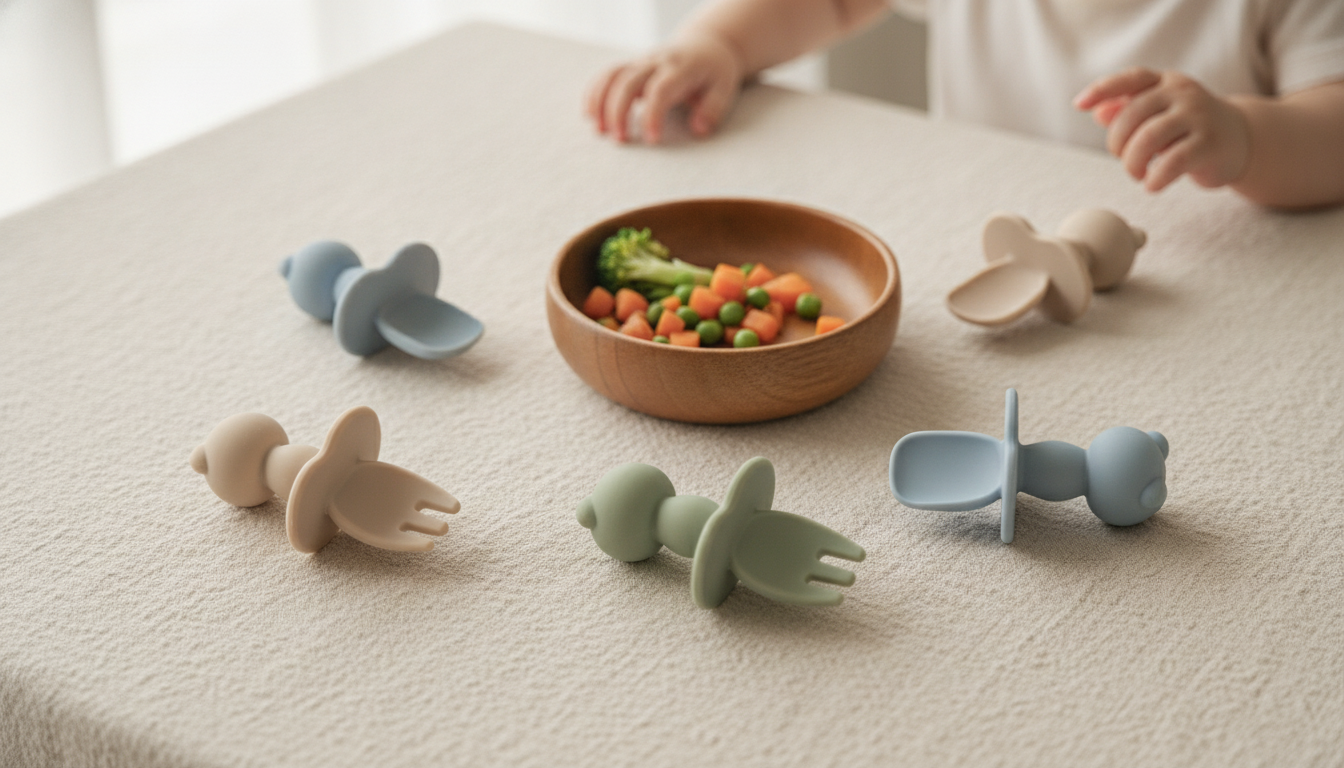
Baby Silicone Fork and Spoon Set for Easy, Safe Self-Feeding
Self-feeding is messy, exciting, and full of new skills. A soft, easy-to-grip fork and spoon set helps little hands practice scooping and poking while staying gentle on gums and early teeth. This guide covers what matters most—materials, safety, cleaning, and age-appropriate use—so mealtimes feel more manageable. For more guidance, see In-Depth Product Reviews: Silicone Spatulas, Turners, and Scrapers ….
What Makes a Baby Fork and Spoon Set Work Well
Baby utensils aren’t just smaller versions of adult forks and spoons. The best sets match how babies actually move: whole-hand gripping, wrist-turned scoops, and lots of mouthing while they learn. For further reading, see Personalized Name Food Grade 6pcs Baby Feeding Set with Spoon ….
- Soft, flexible tips that feel gentle on gums while still being firm enough to pick up soft foods.
- Short, lightweight handles sized for a palmar grasp and early pincer control.
- Non-slip grip texture to reduce twisting and dropping when hands get slippery.
- Rounded edges and smooth seams that avoid irritating lips and cheeks.
- Balanced shape that supports a more natural wrist angle for scooping.
Materials and Safety Checks Before the First Bite
Before the first use, a quick inspection helps prevent problems later. Silicone can be a comfortable material for beginners, but it should be clean, intact, and appropriately designed for babies.
- Choose food-grade silicone and avoid sets with strong chemical odors upon opening.
- Look for smooth, one-piece or tightly bonded construction to reduce weak points.
- Confirm the set is age-appropriate and does not include small detachable parts.
- Avoid deep cracks, peeling, or sticky surfaces that can trap residue and bacteria.
- Stop using any utensil that shows tearing, severe bite marks, or discoloration that doesn’t wash off.
Quick Safety Checklist for Baby Utensils
| Checkpoint | Why it matters | What to do |
|---|---|---|
| No sharp edges or seams | Protects gums and mouth | Run a fingertip along all edges before use |
| Handle is short and easy to grip | Helps control and reduces gagging risk | Prefer baby-length handles over adult-length |
| No loose parts | Reduces choking hazards | Avoid utensils with detachable decorative pieces |
| Material tolerates heat | Supports safe sanitizing | Follow maker guidance for boiling/dishwasher use |
| Utensil remains intact after chewing | Babies mouth and bite utensils | Replace if torn, deeply gouged, or warped |
For additional guidance on reducing food-related risks at mealtime, review the CDC’s tips for families: CDC — Food Safety for Babies and Young Children. For a practical timeline on early feeding, the AAP overview is also helpful: American Academy of Pediatrics — Starting Solid Foods.
Getting Started With Self-Feeding by Age and Stage
Self-feeding is a skill that builds in layers. The goal early on isn’t a clean meal—it’s repetition, confidence, and safer coordination.
- Early practice (around the start of solids): Offer a preloaded spoon for baby to bring to the mouth. This supports independence without requiring perfect scooping yet.
- Developing coordination: Alternate between caregiver-fed bites and baby-led attempts so your child stays satisfied while still getting practice.
- Fork introduction: Start with very soft foods (banana slices, steamed veggies) that are easy to spear and don’t require force.
- Keep portions small and textures soft: Small wins reduce frustration and help babies learn what “worked” when they scoop or poke.
- Supervise every meal: Keep baby upright in a stable high chair and stay within arm’s reach.
Expect “creative” technique: babies often flip the spoon, switch hands, or grip near the head. A short-handled utensil helps limit how far it can go into the mouth and can make practice feel less overwhelming.
Cleaning and Care for Silicone Utensils
Silicone is generally easy to maintain, but oils and strong pigments (like tomato sauce or curry) can hang on if you wait too long. A simple routine keeps utensils fresh and ready.
If you’re evaluating materials for food contact products more broadly, the FDA’s overview can be a useful reference point: FDA — Food Contact Substances (Overview).
Everyday Meal Ideas That Make Utensil Practice Easier
A Simple Option: Baby Silicone Fork and Spoon Set
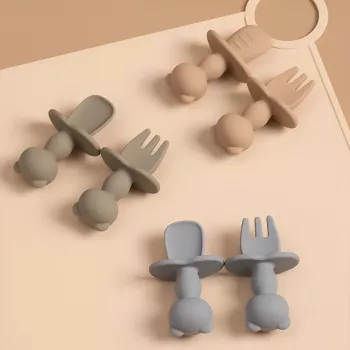
If you want a straightforward starter set that’s designed for early self-feeding, the Baby Silicone Fork and Spoon Set is built for small hands learning to scoop and spear with more comfort than rigid utensils. The silicone material helps keep contact gentle during teething and mouth exploration, and it’s easy to keep on hand as a backup set for daycare bags or travel kits.
More in-stock finds
- Elegant Irregular Oval Shaped Tabletop Mirror for Home Décor for quick checks during busy mornings.
- Handmade Glazed Ceramic Flower Pot for a kitchen windowsill herb or a small nursery plant.
- Burberry Classic Double-Breasted Trench Coat with Check Lining as a long-lasting outerwear staple for parent outings.
FAQ
When can a baby start using a fork and spoon?
Many babies can begin practicing around the start of solids by holding a preloaded spoon and bringing it to the mouth. As coordination improves, increase independent attempts, and introduce a fork after basic spoon control—starting with very soft foods and close supervision while baby sits upright.
How do silicone utensils compare with plastic or metal for babies?
Silicone tends to feel gentler on gums and early teeth and is usually quieter when it taps bowls or trays. Because silicone can be chewed, it should be inspected regularly for tears or deep bite marks; metal is firmer and often works better for older toddlers with stronger control.
How do you remove soap taste or smells from silicone baby utensils?
Rinse thoroughly, air-dry completely, and avoid heavily scented detergents. For stubborn odors, a short soak in a baking-soda-and-water solution often helps, and you can follow the manufacturer’s dishwasher or boiling guidance if permitted.
Recommended for you

Was this article helpful?
Yes
No









Leave a comment